- Shocki News
- YouTube
- Creator marketing
YouTube changed how it counts views: public views vs. engaged views
Since Aug 24, YouTube counts a view as soon as the first frame plays. Autoplay on the home feed now adds to public views, but revenue is still based on engaged views. Here's how the two numbers differ and where to check them.
Dongle Media Lab6 min read
Adapted from ShortShock's “Shocki News” short-form video. Watch it on ShortShock's Instagram (@shortshock.offical).
Key takeaways
Since Aug 24, YouTube counts a public view the moment the first frame plays, for Shorts, long-form videos, and live streams alike. Revenue and YouTube Partner Program eligibility are still based on engaged views. So creators and brand managers shouldn't judge performance or sponsorship rates by public views alone.
If views on your long-form YouTube videos jumped recently, check how views are counted before you celebrate. The counting method changed, so similar videos can now show much bigger numbers than before. Here's what changed and which number you should go by.
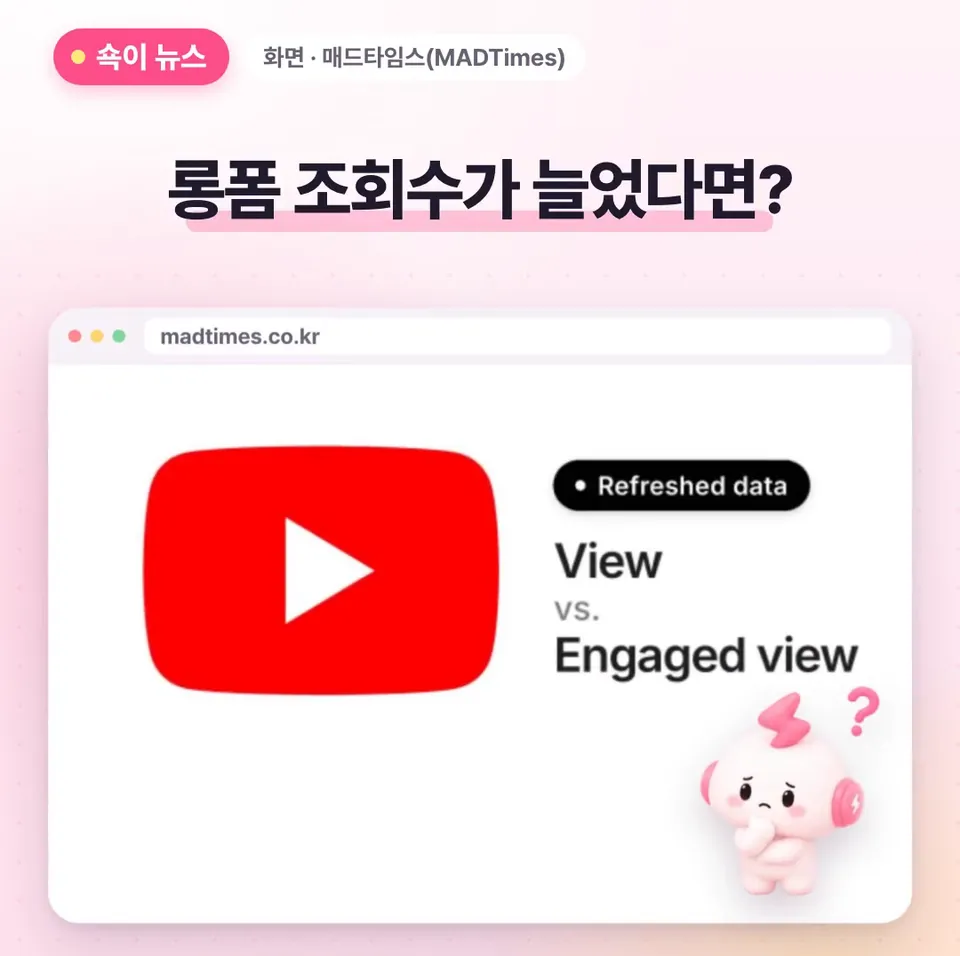
What changed in how YouTube counts views?
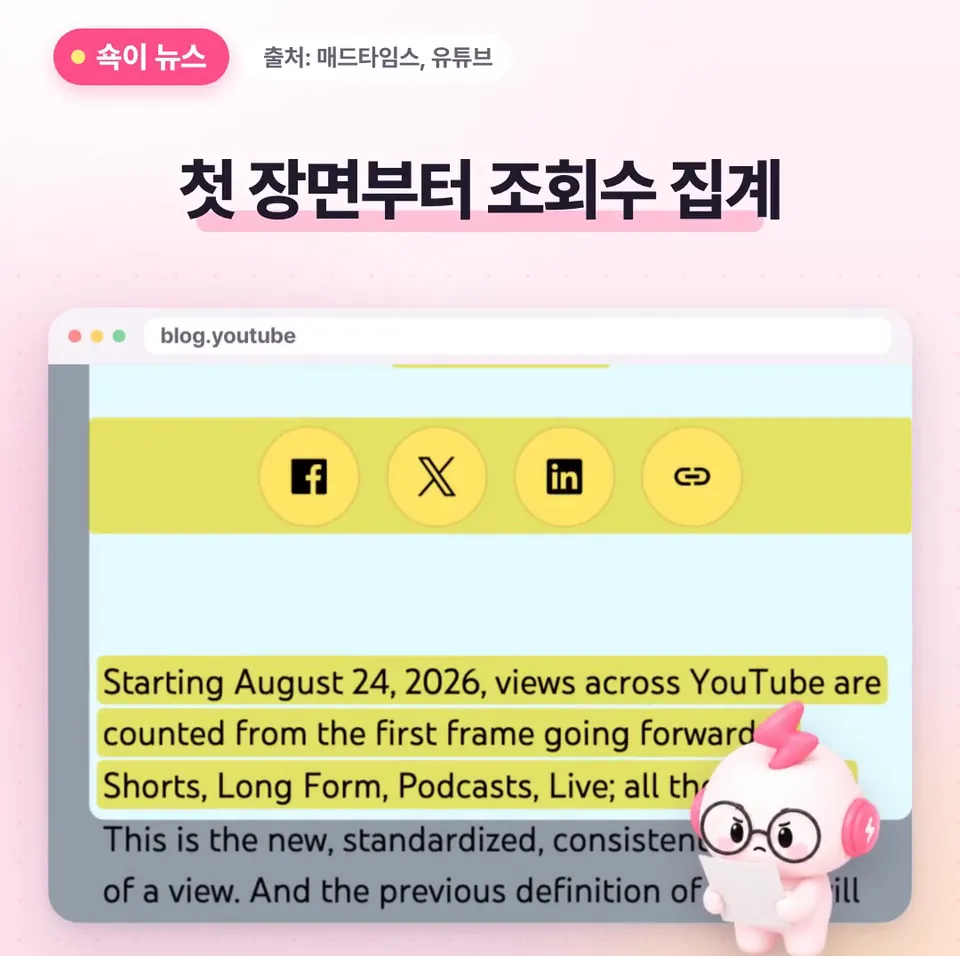
Since Aug 24, YouTube counts a view as soon as the first frame starts playing. The same rule applies to Shorts (short videos), long-form videos, and live streams. This comes from reporting by Korean marketing outlet MADTimes and from YouTube's official blog and Help Center.
MADTimes reported that the change has also shifted how view counts are read in creator advertising and music marketing, because the views shown on screen can now differ from the number of times people actually kept watching.
How are public views different from engaged views?
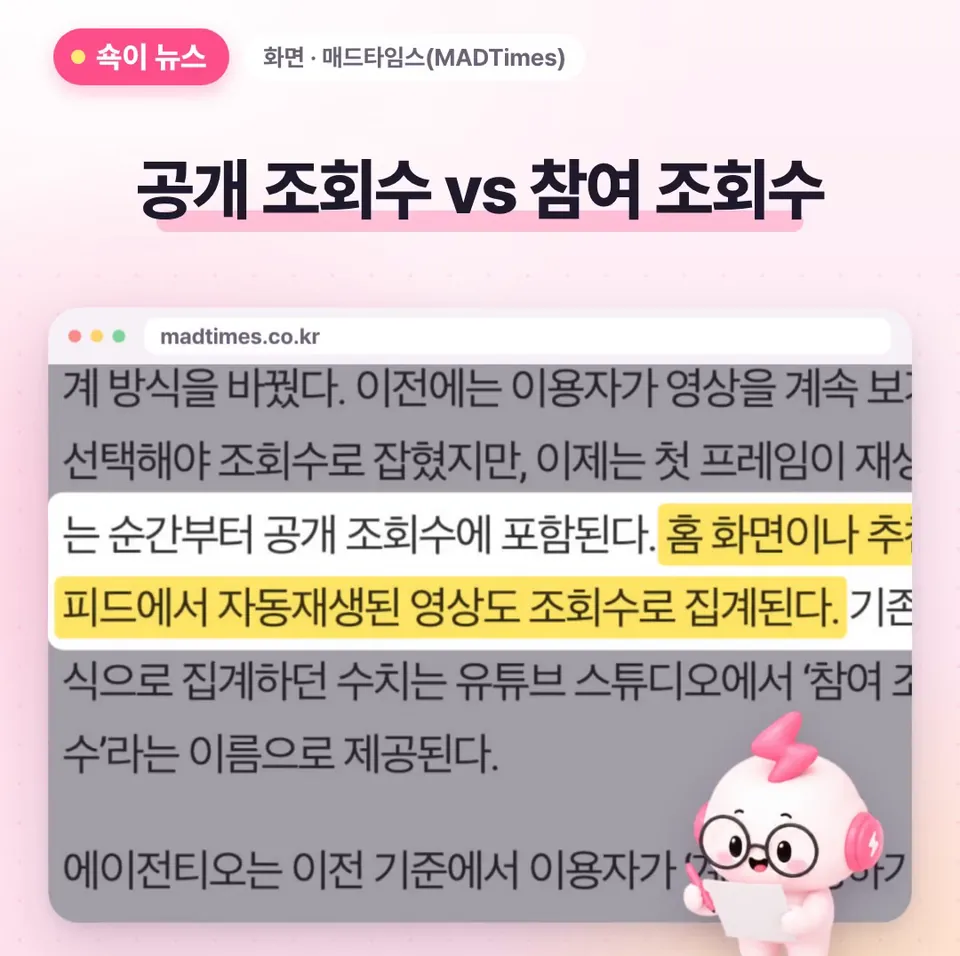
Public views count every time the first frame plays. Even if the viewer doesn't tap, an autoplay on the home feed or in a recommended feed adds to public views.
Engaged views are the number that matches the old standard. They separately count cases where a viewer tapped the video or watched past the first few seconds. In effect, each video now has two view counts.
How big is the gap between public views and engaged views?
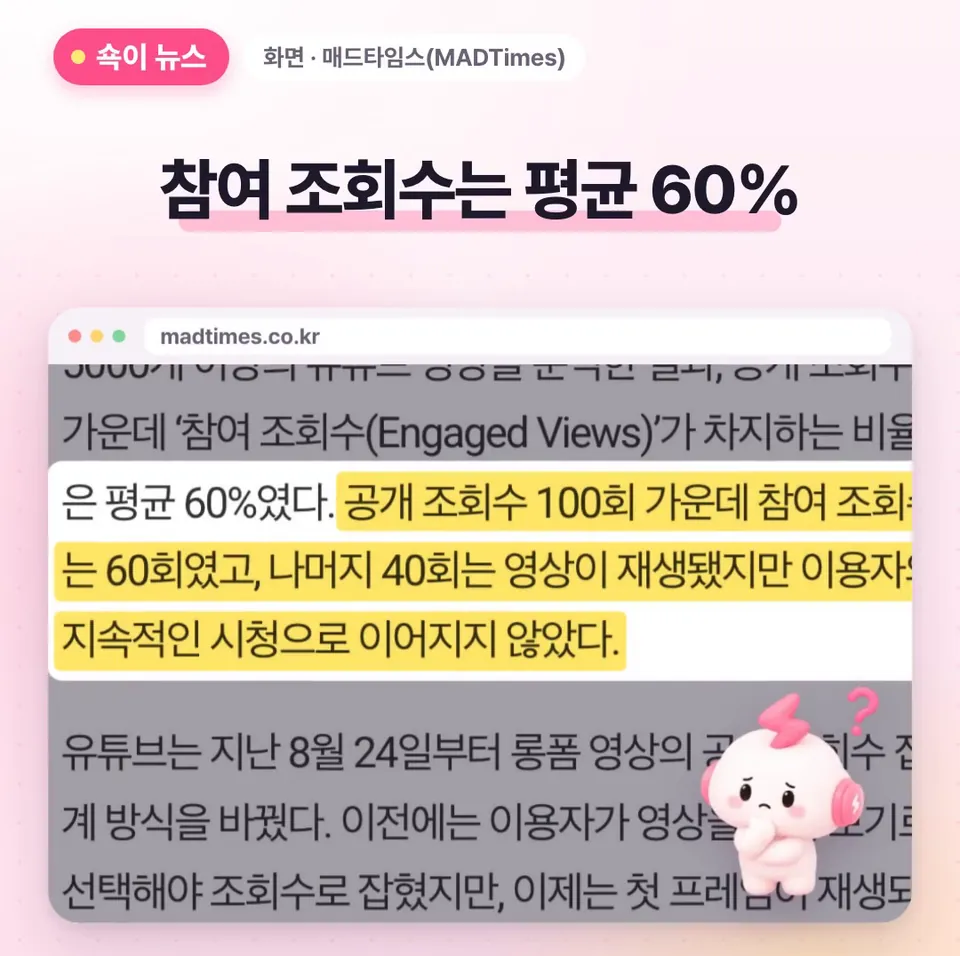
Engaged views averaged 60% of public views. That's from creator ad platform Agentio, which looked at about 75,000 YouTube videos and calculated what share of public views were engaged views.
For small channels, the ratio was 54%, below the average. That means public views alone can make the number look bigger than how many times viewers actually chose to watch.
Do more public views mean more revenue?
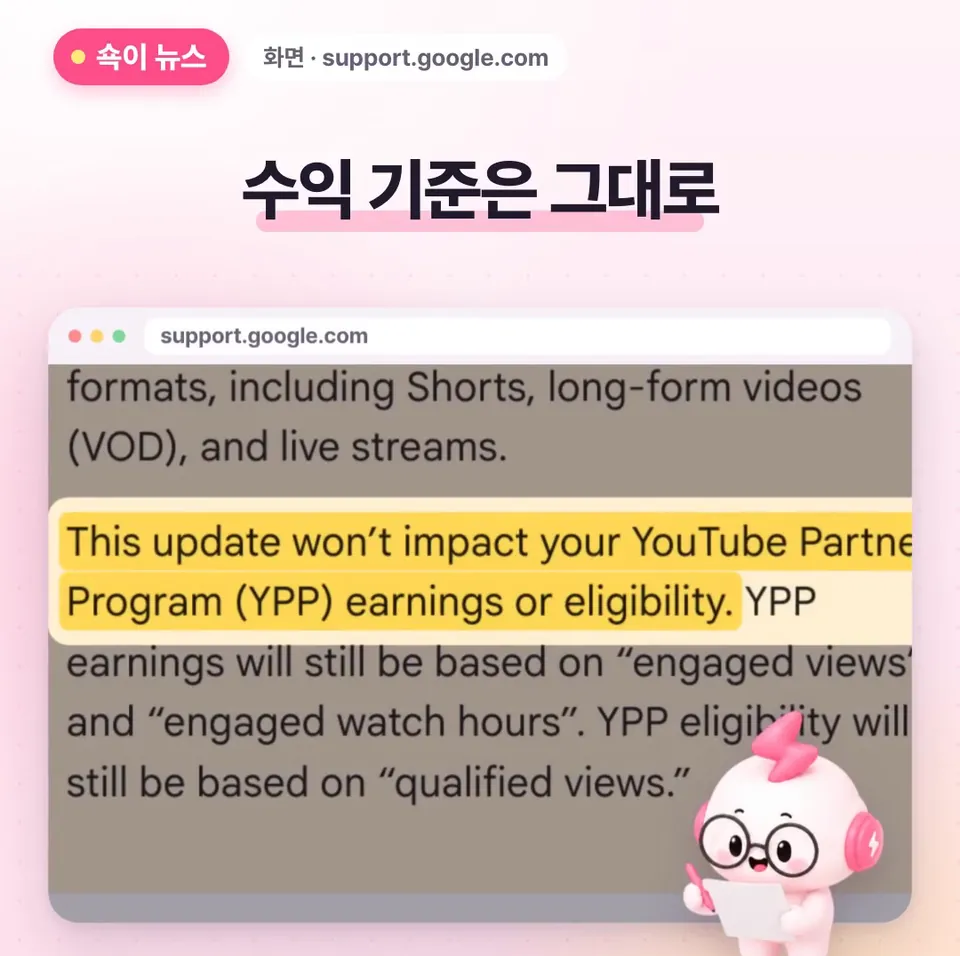
No. YouTube revenue is still calculated from engaged views, and the YouTube Partner Program eligibility criteria haven't changed.
So even if public views rise, revenue doesn't rise with them. If your views jumped noticeably after Aug 24, first check whether that's an effect of the new counting method. Look at engaged views separately before concluding your channel has grown.
What should creators and brand managers check?
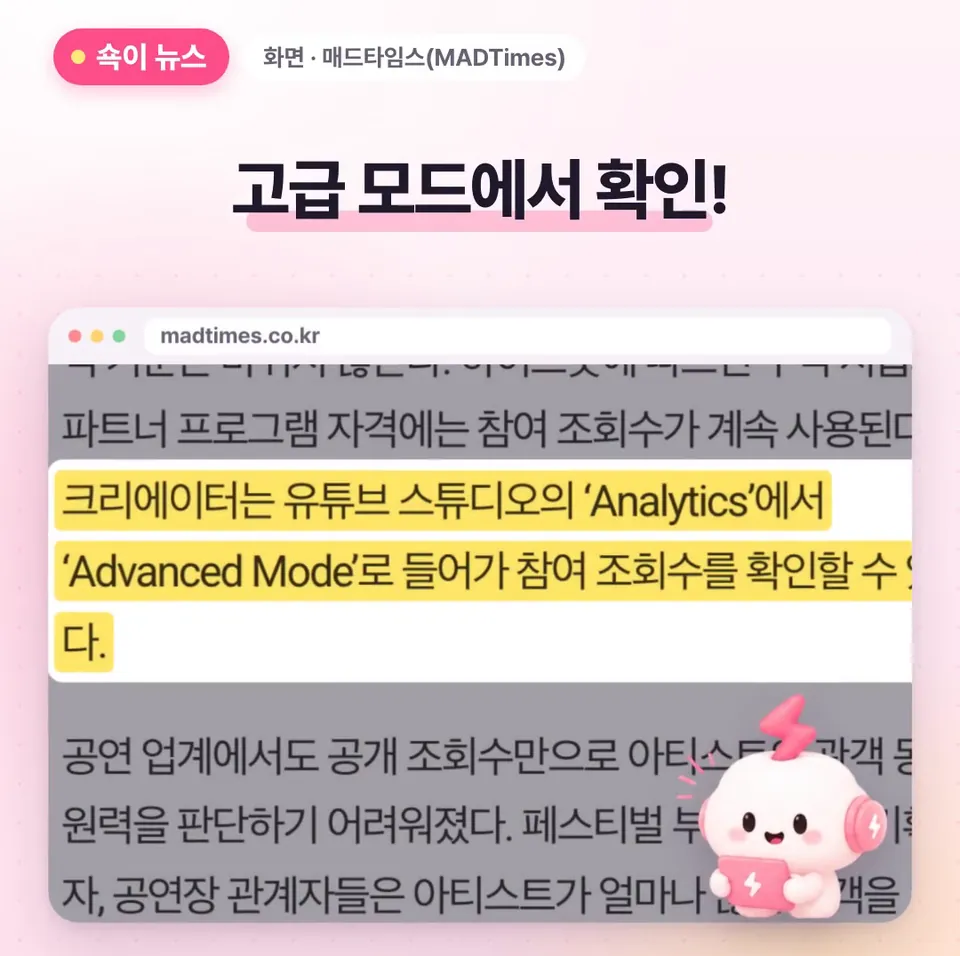
If you're a creator, open advanced mode in YouTube Studio analytics and check your engaged views first. The number that determines revenue is engaged views, not public views. Looking at both together tells you whether views went up because more people actually watched or because of the counting method.
For brand deals, ask up front which view count the rate is based on. The same video shows different numbers depending on whether the baseline is public views or engaged views. MADTimes also noted that the new counting method has changed how ad performance is measured.
Key takeaways
- If your YouTube views rose after Aug 24, first check whether that's due to the change in counting.
- Autoplay on the home feed now counts toward public views, so don't judge audience response by public views alone.
- Revenue and Partner Program eligibility are based on engaged views, so check engaged views in advanced mode in YouTube Studio analytics.
- Before a brand deal, agree on which view count the rate will be based on.
Frequently asked questions
- Where can I check engaged views on YouTube?
- Open advanced mode in YouTube Studio analytics to see them.
- Do views go up even when a video only autoplays on the home feed?
- Yes. Since Aug 24, a public view is counted when the first frame plays, even if the viewer doesn't tap. Cases where the viewer tapped or watched past the first few seconds are counted separately as engaged views.
- Does the change in view counting affect YouTube revenue?
- No. Revenue is still calculated from engaged views, and Partner Program eligibility criteria are unchanged. More public views don't mean more revenue.
Sources
- MADTimes — "Engaged views make up 60% of YouTube public views": new counting method changes how ad performance is measured (in Korean)
- YouTube
- YouTube Official Blog and Help Center